Puerto Rico was home to the Taíno people for centuries before Europe arrived. They called the island Borikén, the land of the brave lord, and the name survives today in Boricua, what Puerto Ricans still call themselves.
Spain claimed the island in 1493, and San Juan became one of the most strategically vital ports in the Americas. Whoever held San Juan Bay held the gateway to the Caribbean, and Spain spent two centuries making sure no one took it.
El Morro
The result is the fortress you'll stand on Wednesday. El Morro, properly Castillo San Felipe del Morro, rises six levels and 140 feet above the sea at the tip of the old city, its guns angled to shred any ship that tried the harbor mouth. It held off the English, the Dutch, and time itself. Together with Castillo San Cristóbal and the old city walls, it forms a UNESCO World Heritage Site, one of the oldest European fortifications in the Americas.
The blue streets
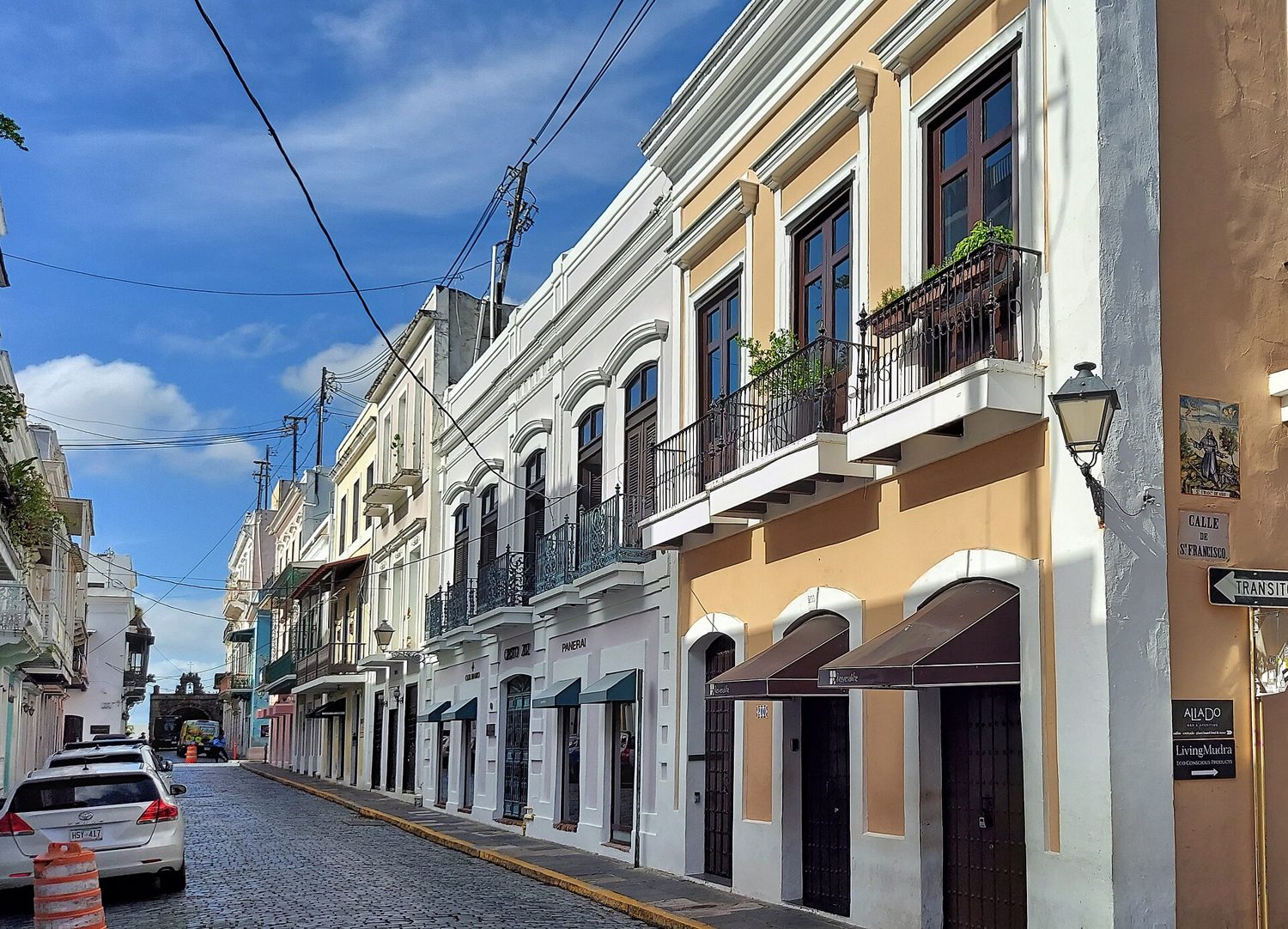
A Calle San Francisco corner in the old city.
The old city behind those walls is the second-oldest European-founded settlement in the Americas. When you walk Calle Fortaleza and Calle del Cristo, the blue stones underfoot are adoquines, cast from furnace slag and carried over as ballast in the holds of Spanish ships, then laid down as streets. They turn faintly luminous after rain, which in late September you'll almost certainly see.
A layered island
The island became a United States territory in 1898, and Puerto Ricans have been U.S. citizens since 1917, which is why you flew in without a passport and why the dollar's in your pocket. What you'll feel all week is the layering: Taíno, Spanish, African, and American, pressed into the food, the music, the language, and the streets you'll spend Wednesday wandering.